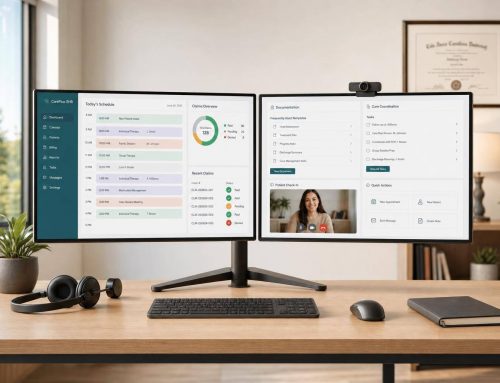
Behavioral health care is shifting rapidly toward value-based care (VBC), where payers prioritize measurable outcomes over service volume. To stay competitive and ensure reimbursement, providers must upgrade their EHR systems to track key metrics like PHQ-9 and GAD-7 scores, follow-up rates, and care coordination data. Without these capabilities, organizations risk financial losses and claim denials.
Key Takeaways:
- Outcomes Matter: Payers require proof of symptom improvement (e.g., PHQ-9 for depression, GAD-7 for anxiety) and care effectiveness.
- EHR Upgrades: Systems must automate data collection, track patient progress, and generate real-time reports.
- Follow-Up & Coordination: Metrics like no-show rates, referral tracking, and care collaboration now impact reimbursement.
- Automation is Critical: Reduce manual tasks with automated workflows, alerts, and templates to maintain compliance and efficiency.
Behavioral health providers need EHRs tailored to their unique needs, ensuring data accuracy and compliance with payer demands. Neglecting this shift could jeopardize financial stability and patient care quality.
Less admin.
Stronger teams.
Better client outcomes.
See how behavioral health organizations streamline documentation, staffing, and client engagement with ContinuumCloud.
Which solution would you like to explore?
Care Management Software VS EHRs: Which is Best for Managing Value-Based Healthcare?
Key Metrics That Determine Reimbursement
Payers now evaluate performance based on more than just the number of sessions provided. The focus has shifted to four primary areas: clinical outcomes, utilization patterns, access and engagement, and care coordination. These metrics directly impact your reimbursement rates.
Clinical outcomes measure symptom improvement using standardized tools like PHQ-9 for depression and GAD-7 for anxiety. Utilization metrics include data on emergency visits, 30-day readmissions, and overall patient care costs. Access and engagement metrics examine no-show rates, time to first appointment, and patient satisfaction. Meanwhile, care coordination looks at factors like medication adherence, follow-up on referrals, and documentation of social determinants of health, such as housing and employment status.
Providers leveraging value-based care analytics have reported average payer savings of 25%, with some seeing reimbursement increases of up to 150%. Why? Because payers prioritize providers who demonstrate cost reductions alongside better outcomes. If your EHR system doesn’t automatically capture and report these metrics, you risk losing potential revenue. These metrics reflect the shift from volume-based to outcome-based care. Let’s dive deeper into some of these measures.
PHQ-9 and GAD-7 Screening Requirements
Standardized assessments like PHQ-9 and GAD-7 are central to measuring clinical outcomes. These tools offer quantifiable data that validate symptom reduction, directly influencing reimbursement.
Since 2018, the Joint Commission has mandated that accredited behavioral health providers use a “standardized tool or instrument” for tracking outcomes. This isn’t optional – it’s a compliance requirement. To meet these standards, integrate and automate PHQ-9 and GAD-7 assessments into your EHR system. Relying on manual tracking or paper forms can lead to gaps that result in claim denials or failed audits.
“Reimbursement now hinges on demonstrated outcomes – symptom reduction, fewer hospitalizations, and overall patient well-being – rather than service volume.” – blueBriX
Sharing this data across care teams is equally important. For example, when a patient is under the care of both a therapist and a psychiatrist, both professionals must have access to the same PHQ-9 scores. Asking patients to repeat assessments due to siloed systems frustrates them and creates audit risks.
Follow-Up Rates and Care Coordination Tracking
Metrics related to patient follow-up and care coordination are critical for documenting comprehensive outcomes. Payers are particularly interested in whether patients receive follow-up care after their initial visit. High no-show rates often translate to higher costs and poorer outcomes. Your EHR should track appointment completion, time between sessions, and outreach efforts for missed appointments.
Care coordination is another key area. Payers expect evidence of collaboration with primary care providers, medication management, and attention to social determinants of health. With nearly half of mental health care occurring in primary care settings, effective cross-system tracking is essential for managing overall health costs. Integrated systems that allow seamless data sharing between teams can significantly improve care coordination and follow-up processes.
Using integrated claims and EHR data for proactive interventions can reduce 30-day hospital readmissions by 18%. However, this requires an EHR capable of identifying high-risk patients, automating outreach for missed appointments, and maintaining a registry of patients needing follow-up care. Without these tools, patients – and revenue – can slip through the cracks. Accurate tracking not only satisfies payer demands but also safeguards your financial stability.
What Your EHR Must Do to Support Value-Based Contracts
Your EHR isn’t just a digital filing cabinet for patient notes. It needs to actively gather, process, and report the exact data payers use to decide your reimbursement rates. If your system lacks these capabilities, you’ll waste time compiling manual reports and risk falling short of contract obligations.
Even though 89.9% of office-based physicians used EHR systems in 2019, many systems don’t offer the functionality needed for value-based care. To meet today’s demands, your EHR should focus on three key areas: real-time data tracking, managing patient populations, and automating workflows to ensure thorough documentation.
Real-Time Outcomes Tracking and Automated Reports
Your EHR should automatically collect outcome data during each patient visit and generate reports that measure your performance against benchmarks. Relying on manual data entry simply doesn’t scale. Tools like longitudinal tracking systems (often called “Flowsheets”) allow you to monitor patient progress over time, identifying trends in critical clinical metrics. Structured data fields make entries consistent, which helps track progress and trigger timely interventions. Regular updates to electronic Clinical Quality Measures (eCQMs) also help you stay compliant with ever-changing value-based care regulations. Without automated reporting, you could find yourself scrambling every quarter to prove your outcomes to payers.
Patient Risk Levels and Population Management Tools
Your EHR should identify high-risk patients who need more intensive care, using both structured data (like diagnoses, medications, and lab results) and unstructured data to create meaningful patient groupings. This not only improves clinical efficiency but also supports broader behavioral health strategies.
Specialized patient registries consolidate patient data, enabling care teams to quickly identify those requiring immediate attention. For instance, in 2022, Advanced Health in Oregon secured 100% of available incentive funding by improving 11 out of 14 quality measures. They achieved this by integrating claims and clinical data feeds to create monthly reports on population health metrics like depression screenings and blood pressure control. Additionally, your EHR should track social determinants of health – factors like housing instability, food insecurity, and transportation challenges – to address nonclinical issues that can affect treatment outcomes.
Automated Documentation and Task Workflows
Automation is key to reducing manual data entry, setting reminders for critical tasks, and avoiding documentation gaps that could lead to denied claims. Your EHR should provide real-time alerts for important preventive screenings and abnormal lab results. In fact, 65% of physicians reported their EHR alerted them to potential medication errors, and 62% received alerts for critical lab values. Customizable charting templates tailored to behavioral health workflows ensure you’re capturing all the data needed for value-based contract metrics during each clinical encounter. Additionally, the system should generate automatic follow-up reminders for missed appointments or overdue preventive screenings, keeping patients on track and ensuring compliance with care plans.
5 Steps to Configure Your EHR for Outcomes-Based Contracts

Shifting from planning to execution takes a clear and manageable strategy. Using the metrics and EHR essentials discussed earlier, these five steps will help ensure your system aligns with payer requirements. Successful organizations in value-based care don’t attempt to transform everything at once. Instead, they implement changes in phases, building on each step. Here’s how to adapt your behavioral health software to meet payer demands without overwhelming your team.
Step 1: Align Data Collection with Payer Metrics
Start by carefully reviewing your contracts to pinpoint the exact data each payer requires. Combine clinical data with claims, operational insights, and patient-reported information to create a comprehensive view. For instance, SSM Health, a Midwest-based non-profit health system, integrated disease registries into their EHR and combined this data with claims information. This approach helped them identify quality gaps for over 600,000 patients across multiple value-based contracts, enabling targeted care improvements.
Your EHR should capture a variety of data types, including:
- Clinical data: Diagnoses, medications, lab results, PHQ-9 and GAD-7 scores
- Financial data: Costs per episode, services rendered elsewhere
- Operational data: No-show rates, referral tracking
- Patient-reported data: Satisfaction scores, symptom severity, and social determinants of health like housing and transportation
Standardizing coding practices is vital to ensure consistent quality metrics. Once your data collection is aligned, the next step is integrating critical assessments into daily workflows.
Step 2: Build PHQ-9 and GAD-7 into Clinical Workflows
Configure your patient portal to automatically send PHQ-9 and GAD-7 forms to patients ahead of their appointments. This saves time during sessions and ensures compliance with screening protocols. Your EHR should calculate scores automatically, highlight severity levels, and display progress trends in graphs, making it easier to demonstrate outcomes to payers.
Step 3: Set Up Alerts and Care Coordination Registries
Your EHR should trigger alerts based on specific clinical or administrative events – such as worsening PHQ-9 or GAD-7 scores, missed appointments, or the need for updated screenings. Real-time risk scoring can help prioritize high-risk cases by considering factors like past suicide attempts, chronic pain, or recent hospitalizations.
Create a centralized communication platform where all care team members – psychiatrists, therapists, and primary care providers – can access updated notes and clinical documentation in real time.
Step 4: Automate Referral Management and Follow-Up Scheduling
Automate your workflows to trigger alerts for scheduling follow-ups. Your EHR should track referrals from initiation, send reminders to patients, and flag missed appointments. Include evidence-based prompts in these workflows to guide clinicians in creating care plans. Before rolling out these changes system-wide, test the workflows with a controlled pilot program.
Step 5: Test with a Pilot Program and Refine Based on Results
Avoid launching new EHR configurations across your entire organization right away. Begin with a pilot program to test and refine the system. For example, one pilot integrating claims and clinical data for 26,000 Medicaid members led to clear quality improvements and secured full incentive funding.
Use a phased approach for implementation:
- Months 1–3: Evaluate data sources and establish baselines
- Months 3–9: Deploy integration middleware
- Months 9–24: Refine metrics and processes based on performance data
“Organizations that wait for quarterly or annual reports arrive too late to change course. Analytics dashboards showing current performance against benchmarks enable course correction while it still matters.” – Ali Brown, OMI Management
Common Problems and How to Solve Them
Behavioral health organizations often encounter hurdles when adapting their EHR systems for value-based contracts. These challenges can disrupt workflows, frustrate staff, and even jeopardize revenue streams. Let’s look at some common issues and how to address them effectively.
Problem: Disconnected Systems That Don’t Share Data
Many organizations juggle multiple systems – EHR, billing, HR, payroll, finance, and outcomes tools – that don’t communicate with each other. This lack of integration forces teams to manually reconcile data, increasing errors and inefficiency. For example, in February 2026, a behavioral health organization with over 90 service locations partnered with VisionWrights to tackle this exact issue. By creating a unified analytics and data warehouse layer to connect their EHR, payroll, and billing systems, they eliminated 1,194 hours of manual work each month. This change translated into an annual labor cost saving of $736,920.
The solution: Implement a lightweight data warehouse layer that standardizes exports from different systems into a shared structure. Leverage modern interoperability standards like RESTful FHIR APIs for clinical data and X12 for claims and billing. For older systems, middleware can help translate legacy HL7 v2 feeds into FHIR, effectively bridging the gap.
“The EHR is not the problem. The absence of a data layer connecting your EHR, payroll, GL, and outcomes tools is.” – VisionWrights
This integrated approach reduces revenue risks tied to data discrepancies. But even with better data integration, excessive documentation remains a major pain point.
Problem: Too Much Time Spent on Documentation
Value-based care demands more structured data and assessments, which can overwhelm staff and lead to burnout. Poor documentation practices are responsible for 32% of billing denials, with behavioral health practices losing 10% to 20% of potential revenue due to preventable billing errors and claim denials. Excessive after-hours documentation also contributes to clinician burnout.
The solution: Use tools like pre-filled templates, standardized dropdown menus, and automated note generation to streamline paperwork. Consider adopting HIPAA-compliant ambient AI tools that “listen” during sessions and generate structured notes (e.g., DAP, SOAP, BIRP) for clinician review. A study in JAMA Network Open found that clinicians using ambient AI spent less time in the EHR, experienced reduced cognitive load, and reported higher job satisfaction. These tools not only reduce clinician workload but also help meet documentation requirements for value-based care while minimizing revenue loss from billing mistakes.
Problem: Staff Pushback on New EHR Features
Resistance from staff can further complicate EHR updates. Clinicians may feel that new features add to their workload without providing clear benefits, slowing implementation and undermining value-based care efforts.
The solution: Shift the narrative to focus on how these changes enhance clinical decision-making and improve patient outcomes.
“I’d like to get it reframed as measurement-informed care, because measurement alone does not make our decision for us, nor should we allow it to.” – Dr. Joe Parks, Medical Director, National Council for Mental Wellbeing
Before introducing new features, observe clinicians’ workflows to identify pain points. Pilot the changes with a small group to refine training and configuration. Offer hands-on training in sandbox environments where staff can practice without impacting live patient data. This approach builds confidence and ensures smoother adoption while maintaining the data quality needed for value-based care compliance.
Why Behavioral Health Needs a Specialized EHR
Generic EHR systems often fall short when it comes to addressing the unique needs of behavioral health. They struggle to integrate treatment plans, daily progress notes, and long-term outcomes into a seamless system – what’s often referred to as the “Golden Thread”. This integration is crucial for meeting payer reimbursement requirements, and without it, documentation gaps arise. These gaps not only affect reimbursement but also make it harder to comply with the specialized regulations that behavioral health organizations face.
Compliance is another major hurdle. Behavioral health providers must adhere to specific standards like 42 CFR Part 2, which governs substance use privacy, and the 2026 CARF standards, which demand documented procedures for using outcome data in treatment decisions. Generic EHRs often fail to meet these stringent requirements, increasing the risk of audits. In fact, 32% of denials are directly linked to inadequate documentation. Specialized EHRs, such as those offered by ContinuumCloud, are designed to address these challenges head-on.
Beyond clinical care, the platform integrates HR, payroll, and clinical data. This ensures that only compliant staff are scheduled for billable services, reducing the risk of interruptions or billing issues.
Automation plays a significant role in reducing compliance errors – by as much as 90%. Real-time dashboards highlight expiring certifications or missing documentation instantly, and automated alerts for license renewals are sent 30, 60, and 90 days in advance. These features not only support the demands of value-based care but also make it manageable without overwhelming staff.