The short answer: this staffing crisis is not going away soon, so I need better systems – not more hope – to keep care moving. In the U.S., about 122 million people live in mental health shortage areas, the workforce meets only 27% of need, and shortages are projected to continue into 2036. That means more overtime, more turnover, more missed revenue, and more pressure on care teams.
Quick takeaways from this article:
- The problem is structural. Training takes 7 to 12 years, demand keeps growing, and 43 of 44 states reported behavioral health workforce shortages in 2024.
- The cost is steep. Replacing one clinician can cost 90% to 200% of salary. A $75,000 therapist may cost $67,500 to $150,000 to replace.
- Open roles hurt access and revenue. One vacant clinician role can mean about $30,000 in lost billable visits over three months.
- Poor staffing hits care quality. Long waits, closed caseloads, missed visits, and burnout all get worse when coverage is thin.
- Technology helps where daily pressure starts. Scheduling tools, workforce analytics, payroll, time tracking, and license tracking can cut admin work, reduce overtime, and flag staffing issues earlier.
- Connected systems matter most. When HR, scheduling, payroll, and clinical data work together, I get fewer duplicate tasks and a clearer view of staffing risk.
A simple way to think about it: better scheduling helps cover shifts, analytics help spot patterns, payroll and compliance tools help keep trust, and connected systems help tie it all together. That won’t fix the labor gap by itself, but it can make staffing more stable and less chaotic.
Behavioral Health Workforce Crisis: Key Stats & Financial Impact
Less admin.
Stronger teams.
Better client outcomes.
See how behavioral health organizations streamline documentation, staffing, and client engagement with ContinuumCloud.
Which solution would you like to explore?
Today’s workforce challenges and their financial impact
How turnover and understaffing raises costs
Behavioral health organizations lose money every time a clinician walks out the door. And the numbers add up fast.
Annual turnover in this field often lands between 30% and 40%. Replacing one behavioral health professional can cost 90% to 200% of that person’s salary. For senior or specialized roles, that figure can climb as high as 400%.
Put that into plain terms: if a therapist earns $75,000 a year, replacement costs can hit $67,500 to $150,000 once you factor in recruiting, onboarding, credentialing, and lost productivity.
Open roles create another problem: fewer billable appointments. One unfilled clinician position can lead to about $30,000 in lost billable visits over three months. That’s a hard hit for any organization, especially when demand is already high.
To keep the doors open, many teams lean on overtime or temp help. But that patch gets expensive. Contract clinicians can cost 2 to 3 times more per hour than full-time staff. In a 50-clinician organization with 40% annual turnover, replacement costs plus absenteeism can reach about $330,000 per year – and that’s before lost billable revenue enters the picture.
Those dollars don’t disappear in a spreadsheet. They show up in client access, staff strain, and day-to-day pressure across the whole team.
How workforce strain affects care delivery
The strain shows up where it hurts most: access, continuity, and clinician workload.
About 23% of mental health providers report wait times of four weeks or longer, or caseloads that are closed to new clients. So even when people need care, they may not be able to get in. And when they do, the experience can still feel shaky. If a clinician leaves, clients may deal with rescheduling, reassignment, or gaps in care.
That break in continuity matters. Youth who lose their therapist are 86% more likely to miss a future therapy session.
The pressure doesn’t stop with front-line clinicians. Supervisors often get pulled away from coaching and quality work and pushed into crisis coverage, onboarding, compliance, and schedule cleanup. It’s a constant scramble. That added load can wear them down too, which pushes the turnover cycle even further.
Absenteeism adds another layer. Workers with poor mental health average nearly 12 unplanned absences a year, compared with 2.5 days for workers in better health. More absences mean more holes in the schedule, more last-minute changes, and more lost productivity.
A lot of this starts with coverage gaps. Better scheduling and workforce planning can help cut some of that pressure before it spreads.
How better scheduling and workforce planning reduce daily strain
Using scheduling tools to improve coverage and staff experience
Coverage gaps rarely show up in one big moment. They usually build piece by piece: a missed call-out, a last-minute reassignment, a group session with no one assigned to lead it. When teams rely on spreadsheets or printed schedules, those issues are harder to spot and slower to fix.
Rule-based scheduling shifts that. Teams can set credential rules, staffing ratios, rest periods, and overtime limits so the schedule lines up with clinical and compliance needs. If someone calls out, the system can flag qualified replacements in real time instead of forcing a manager to hunt through texts, emails, or paper notes.
That kind of setup also makes the workday feel less chaotic for staff. More predictable schedules can ease stress and help keep people from leaving. When clinicians and support staff can check assignments across outpatient, residential, and crisis rotations on a mobile device, request shift swaps, and get real-time alerts about changes, they have a clearer picture of their day. It may sound like a small thing, but it matters for retention. A two-year Finnish public sector study (N=2,427) found that participatory scheduling software reduced the risk of low control over shift scheduling by 66% (risk ratio 0.34) and reduced the risk of short sleep by 30%.
Aligning staffing plans to actual demand
Behavioral health demand isn’t flat. Outpatient clinics often get busier on Mondays and in the early evening. Crisis lines can spike on weekends. Residential census can shift after holidays. That means workforce planning isn’t only about efficiency. It’s also tied to burnout and turnover.
Without data, staffing choices tend to follow habit instead of evidence. That’s often when chronic overtime and last-minute agency costs start to creep in.
Once coverage is more stable, the next move is matching staff levels to actual demand. Technology-enabled scheduling helps organizations build staffing models based on past patterns, including appointment volume, crisis call volume, census, and no-show rates. Leaders can then adjust coverage before shortages hit. Organizations using data-driven shift management have reduced overtime costs by 20% to 30% as a result.
Manual scheduling vs. technology-enabled scheduling
The gap between manual and technology-enabled scheduling isn’t only about speed. It’s also about what leaders can see, how evenly rules are applied, and how fast the organization can react when plans change.
|
Dimension |
Manual Scheduling |
Technology-Enabled Scheduling |
|
Staff experience |
Limited visibility; staff rely on printed schedules or manager updates; last-minute changes increase stress |
Real-time access via web/mobile; self-service shift requests and notifications improve predictability |
|
Manager time |
High; hours spent on calls, texts, and spreadsheets to fill gaps |
Automated rule-based generation; less time on logistics, more on leadership |
|
Visibility |
Gaps often discovered day-of; difficult to track across multiple sites |
Dashboards and alerts highlight unfilled shifts and understaffed units across all programs |
|
Consistency |
Rules applied unevenly; higher risk of inequitable workload distribution |
Standardized templates enforce staffing ratios, credential use, and workload balancing |
|
Adaptability |
Mostly reactive; adjustments made after problems surface |
Forecasting based on historical data; proactive staffing adjustments before issues escalate |
Once scheduling is under control, connected workforce tools can help leaders keep those gains in place through better analytics, payroll accuracy, and compliance tracking.
Using analytics, payroll, and compliance tools to support retention
Stable schedules are only the start. After that, leaders need to know if staffing choices are working day to day. They need a live view of who’s leaving, where pressure is building, and whether payroll and compliance systems are building trust or chipping away at it.
Workforce analytics and forecasting for better decisions
Most behavioral health organizations already sit on the data they need. The problem is that it’s scattered across HR, scheduling, payroll, and EHR systems. Connected analytics tools pull those pieces together and show patterns that are easy to miss when each system is viewed on its own.
The metrics that tend to matter most include vacancy rates by role and program, time-to-fill, overtime, and turnover by supervisor, program, and tenure. When leaders can see those numbers in one dashboard, warning signs show up earlier. Maybe vacancy rates are climbing in a key program. Maybe night shifts are understaffed week after week. That kind of visibility gives teams a chance to step in before staffing strain turns into a full-blown crisis.
Forecasting pushes this further. By looking at past intakes, scheduled visits, and census patterns, leaders can estimate staffing needs by role for the next quarter or year. That makes hiring plans more grounded in demand instead of guesswork. Between 2022 and 2024, NYC Health + Hospitals reduced behavioral health staff turnover from 18% to 8% and cut vacancy rates from 14% to 6% by applying data-driven workforce strategies, including hiring approximately 100 new psychiatrists and 400 social workers to meet projected need.
Turnover pattern analysis is just as useful in practice. If the data shows that early-career clinicians on high-overtime teams are leaving at twice the rate of their peers, that’s not just a hiring problem. It’s a signal to adjust scheduling rules, supervision, or career path options instead of posting another opening and hoping for the best.
How payroll, time tracking, and compliance affect retention
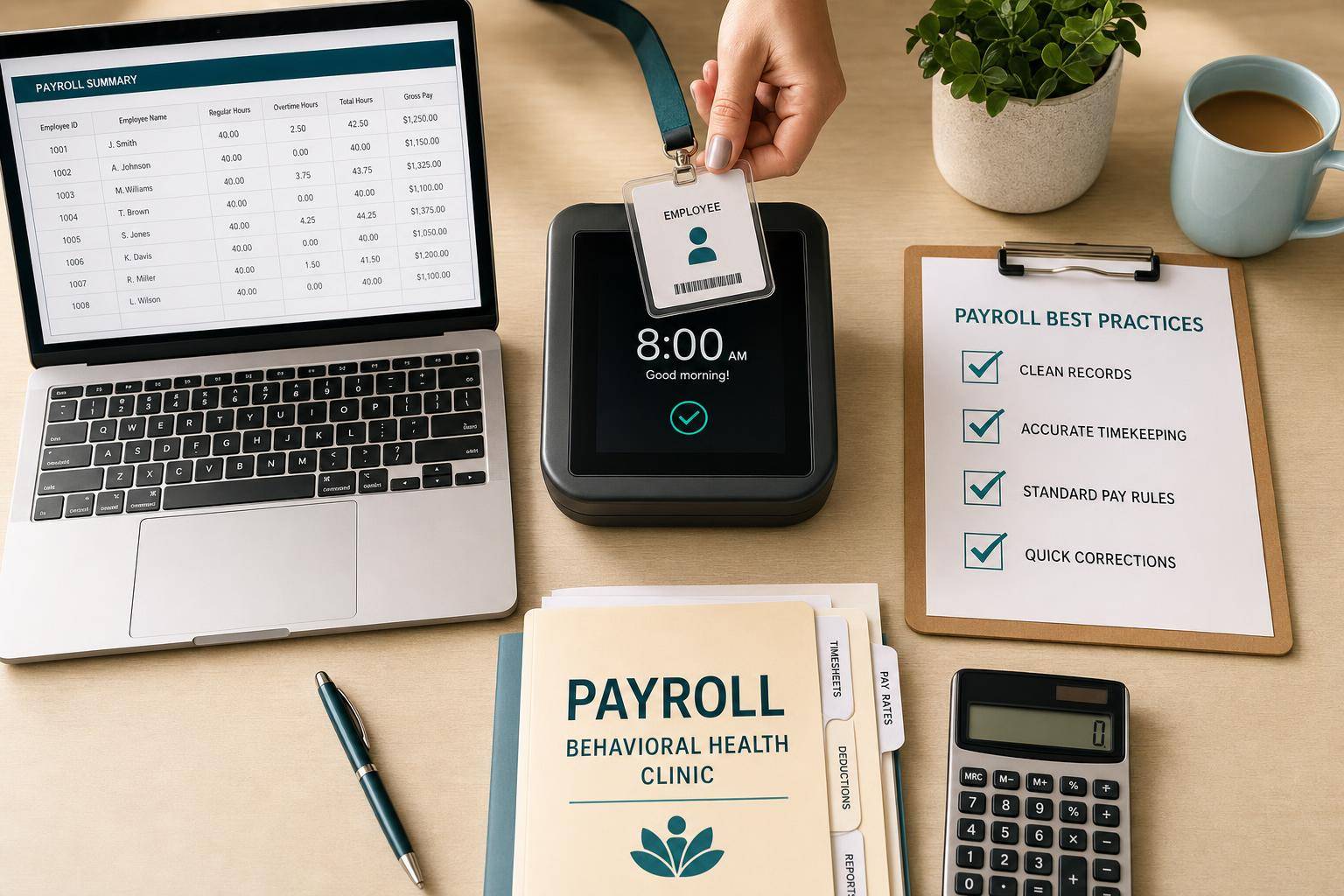
Pay accuracy matters more than many leaders think. 81% of healthcare administrators report at least one payroll error every month, and 20% of care workers say even a single payroll mistake would shake their confidence in their employer. In behavioral health, where employees often work overnight differentials, on-call shifts, and multiple program rotations, mistakes can happen easily and leave a lasting mark.
When employees can view their time entries, pay calculations, and PTO balances in a self-service portal, one of the most common sources of frustration starts to fade. Self-service access cuts down on pay disputes and helps build trust. Clear time tracking also gives managers a better way to apply overtime limits evenly, which matters for both compliance and burnout control.
Compliance monitoring has a similar effect. Credential tracking systems that automatically flag upcoming license expirations at 30, 60, and 90 days can stop the last-minute schedule problems that quietly wear down trust. When a clinician’s license lapses and they’re pulled from a shift with no warning, the whole team feels it. Automated alerts help prevent that. They also cut audit prep time by 50% to 75% for organizations using automated compliance tracking.
These tools do their best work when they’re connected instead of handled as separate admin tasks.
Key workforce analytics use cases
The four analytics use cases below address some of the most common workforce problems in behavioral health. Each one brings a different kind of operational value, and they also connect in practical ways. Turnover data shapes forecasting. Absence trends shape coverage plans. Forecasting then feeds hiring and scheduling decisions.
|
Use Case |
Primary Operational Benefit |
|
Turnover tracking |
Targeted retention strategies, reduced turnover cost, stable teams |
|
Staffing forecasting |
Better hiring plans, reduced agency use, aligned labor budgets |
|
Compliance monitoring |
Strong audit readiness, reduced risk, assurance that staff meet payer and regulatory requirements |
|
Absence trend analysis |
Early burnout detection, improved coverage planning, fairer leave practices |
The hardest part is usually data quality. Teams that start small, with a few high-impact metrics like turnover by program, overtime levels, and vacancy rates, often build confidence in the data faster. They also tend to see stronger manager adoption than organizations that try to measure everything all at once.
Building a resilient workforce strategy with connected behavioral health technology
The next step is to connect those tools so data moves once, not three times. When systems don’t talk to each other, staff end up entering the same information again and again. That creates gaps, slows decisions, and adds admin work that pushes burnout even higher. A connected setup helps close those gaps.
How ContinuumCloud supports a connected workforce strategy
ContinuumCloud brings together three connected platforms for HR, payroll, scheduling, documentation, and client engagement. When a session is documented, that data can move into payroll, billing, and follow-up workflows automatically. In plain terms, staff do less duplicate work, and leaders get a clearer picture of where staffing pressure is starting to build.
That kind of workflow connection can lead to measurable gains. Connected systems can save staff time, cut documentation burden, and move data faster across clinical, workforce, and engagement workflows.
What leaders should focus on next
That operational base is what makes a long-term workforce strategy possible.
The behavioral health workforce shortage is structural, but organizations can still build more stable operations now. The most practical path is incremental: start by aligning workforce data, then automate the tasks that create the most friction, such as:
- scheduling
- time tracking
- credential monitoring
- client outreach
From there, use the analytics that come from connected systems to make staffing decisions based on actual demand instead of instinct.
Employee experience needs the same level of attention. Self-service pay, better schedules, and less documentation friction directly support retention. Behavioral health clinicians who are satisfied with their jobs and practice environments have 5-year anticipated retention rates nearly three times higher than those who are neutral or dissatisfied. Connected technology may not solve the workforce crisis overnight, but it can make staffing more stable, more accurate, and easier to manage.
FAQs
Where should we start with workforce technology?
Start by replacing disconnected spreadsheets with a unified, cloud-based HCM system. Bring hiring, onboarding, scheduling, payroll, and compliance tracking into one place on a single data foundation.
Then focus on automating high-impact tasks like credential management and onboarding workflows. When you link roles to funding sources and use position-based management, you get real-time visibility into staffing needs and labor costs.
How do connected systems improve retention?
Connected systems can help keep staff longer because they cut the drag that comes with disconnected tools. When recruiting, scheduling, payroll, and performance management live in one platform, teams spend less time on manual data entry and more time on client care.
They also give managers real-time visibility into engagement and burnout risks. That means teams can spot problems early instead of reacting after someone is already checked out or ready to leave.
Reliable automated processes matter too. Accurate payroll and smoother onboarding help build trust, and that trust can go a long way in improving job satisfaction.
What metrics should leaders track first?
Start with position control. It helps you track authorized roles, open positions, and budget alignment at the position level instead of tying everything to individual employees.
It also helps to monitor a few core staffing metrics:
- turnover rates
- time-to-fill for critical roles
- labor costs per position
- vacancy duration
When you track all of this in one system, leaders get real-time visibility into staffing, finances, and operational capacity.