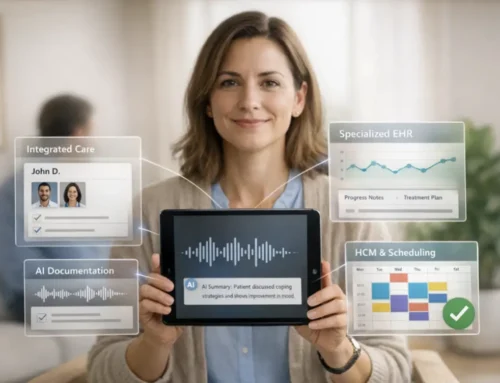
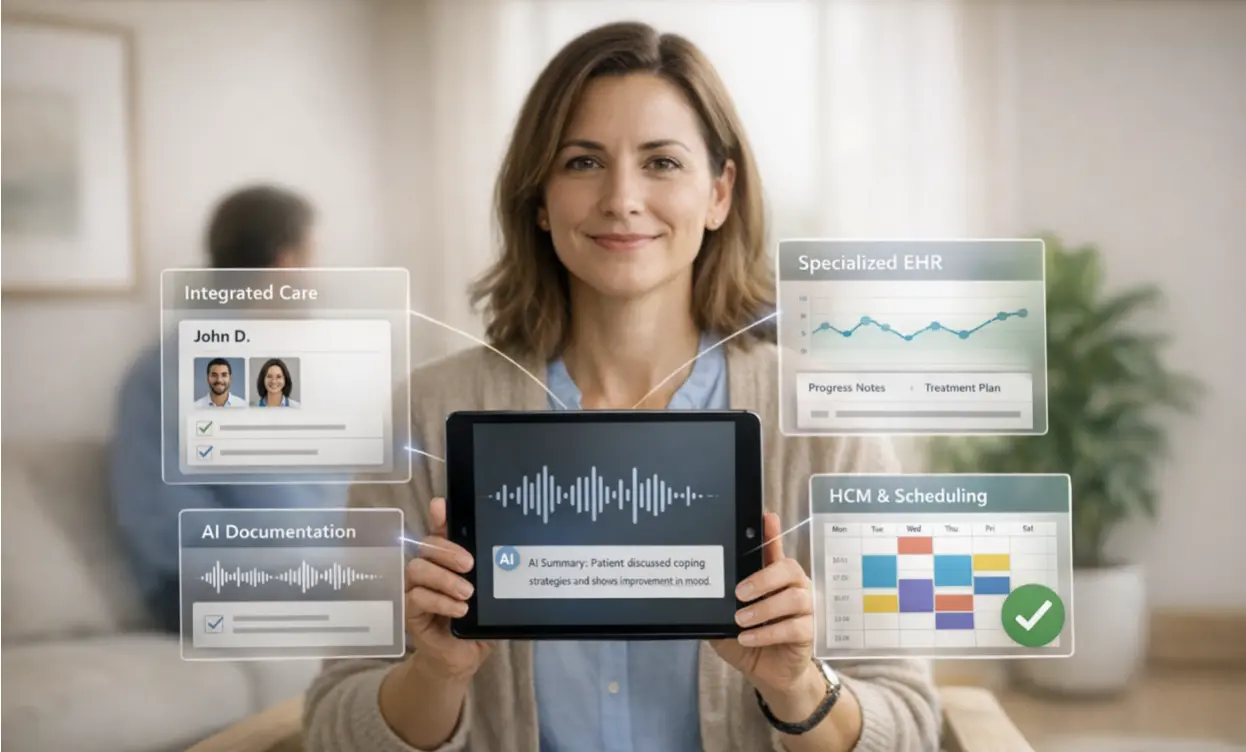
In behavioral health, patient engagement apps are stepping up where Electronic Health Records (EHRs) fall short. These apps prioritize patient involvement by offering tools like mood tracking, real-time communication, and personalized care plans – all accessible through mobile devices. Unlike EHRs, which focus on documentation and billing, engagement apps help patients actively participate in their treatment and recovery. They also reduce barriers like stigma, cost, and access issues, while improving outcomes, care coordination, and satisfaction.
Key Points:
- Why EHRs Fall Short: Limited tools for patient interaction, heavy admin workload for providers, and lack of mobile access.
- What Engagement Apps Offer: Mood tracking, telehealth, personalized care plans, real-time communication, and automated reminders.
- Behavioral Health Benefits: Increased patient involvement, reduced stigma, better self-management, and more effective measurement-based care.
- Practical Advantages: Easier scheduling, less administrative work, and improved collaboration between patients, families, and care teams.
These apps are transforming behavioral health by focusing on patient empowerment, continuous support, and accessible care.
Core Features of Dedicated Patient Engagement Apps
Real-Time Communication and Telehealth
Dedicated patient engagement apps provide secure, instant communication through HIPAA-compliant messaging. These tools allow patients to share texts, photos, and documents safely. Features like message read receipts, priority flags, and automated check-ins ensure that even off-hour concerns are addressed promptly – patients no longer have to wait for their next appointment to get guidance.
For behavioral health, crisis support features stand out. Many apps include emergency options like panic buttons or direct links to crisis hotlines. Automated check-ins often prompt patients to report their mood, using escalation protocols to alert providers if responses signal potential risks. This proactive approach ensures timely intervention when it’s needed most.
Telehealth has become a cornerstone of these apps, especially after the COVID-19 pandemic made virtual care more common. Patients can join video appointments directly from the app, avoiding the hassle of juggling multiple platforms or remembering login details. This streamlined setup removes obstacles to care and helps patients stick with their treatment plans.
By combining real-time communication with telehealth, these apps not only address immediate needs but also pave the way for ongoing, personalized care.
Personalized Care Plans and Progress Tracking
These apps break treatment plans into manageable daily tasks, such as a quick breathing exercise or jotting down a few positive thoughts. Each completed task is tracked, helping patients see measurable progress through mood charts or goal completion metrics. This sense of achievement can be particularly motivating, especially in behavioral health, where changes often happen gradually.
Progress tracking goes beyond simple metrics. Visual tools like mood graphs, symptom severity charts, and completion percentages provide clear evidence of improvement. This can be incredibly encouraging for patients who might otherwise overlook their progress.
Personalization is another key feature. Apps can adapt to individual habits, learning when a patient is most likely to engage or what types of reminders are most effective. For instance, the app might suggest the best times for therapy exercises or even flag patterns that could indicate emerging concerns.
Digital care plans also make it easier for family members or caregivers to stay involved. With proper authorization, they can access progress updates, understand treatment goals, and provide informed support at home. This shared insight strengthens the overall support system, ensuring patients feel encouraged and understood.
Appointment Scheduling and Automated Reminders
To complement communication and care plans, these apps simplify appointment management with self-service scheduling and automated reminders. Patients can browse available time slots, book appointments that fit their schedules, and even join waitlists for preferred times – all without having to call the clinic.
Automated reminders go a step further, offering more than just a nudge about the date and time. They can include preparation tips, like bringing a list of medications or completing a mood assessment before the session. Patients can choose how they receive these reminders – via text, push notifications, or email – making it easier to stay on track.
Rescheduling is also a breeze. Patients can adjust appointments directly in the app, with real-time updates syncing with the provider’s calendar. This reduces the risk of double-booking and minimizes the need for back-and-forth communication with clinic staff.
Some apps even include pre-appointment tools, like questionnaires or prompts to outline discussion points, ensuring sessions are focused and productive. By streamlining scheduling and reminders, these apps help reduce administrative burdens while improving the consistency of care – an essential factor in behavioral health.
How Patient Engagement Apps Solve Behavioral Health Problems
Reducing Access Barriers and Care Obstacles
Behavioral health care often comes with hurdles like geographic distance, transportation issues, and scheduling conflicts. Patient engagement apps tackle these challenges head-on by delivering care directly to a patient’s smartphone.
One of the biggest barriers to seeking mental health care is the stigma associated with it. Many people avoid treatment because they fear being judged for visiting a behavioral health clinic. Apps offer a private alternative, allowing patients to access support, complete assessments, and communicate with providers discreetly from their own homes.
Cost concerns are another significant obstacle that apps help address. By eliminating the need to travel, pay for parking, or take time off work, these tools make care more affordable. For individuals in rural areas with limited access to specialists, apps provide a lifeline, connecting them to qualified providers without the need for long commutes.
Additionally, these apps offer round-the-clock access to tools and resources, ensuring patients can find support when they need it most. Unlike traditional care, which often operates within standard business hours, apps provide help during late-night or weekend crises when symptoms may escalate.
Language barriers are minimized as well, with many apps featuring multilingual options and culturally relevant content. This is particularly beneficial for underserved groups who may struggle to find providers who understand their language or cultural context. Beyond just improving access, these apps also encourage active participation in care.
Building Patient Accountability and Self-Management
Once access barriers are reduced, patient engagement apps empower individuals to take charge of their recovery. These tools encourage proactive care through daily engagement and self-monitoring features.
For example, habit formation becomes easier with the help of consistent reminders. Apps can send personalized prompts for practicing coping strategies or taking medication, making it simpler to establish and maintain healthy routines.
These apps also foster accountability by helping patients set and track goals. Seeing tangible progress, like mood improvements over time, gives patients a sense of ownership over their recovery. This visual feedback can be especially motivating, even during periods when enthusiasm wanes.
Some apps include peer support features, connecting users with others facing similar challenges. These virtual communities create a sense of shared accountability, where patients encourage one another to stay consistent with their treatment plans.
By logging daily moods, sleep patterns, and stress levels, patients gain insights that empower proactive decision-making. Recognizing symptom patterns or triggers allows them to make informed choices about their care instead of merely reacting to crises.
Apps also provide real-time feedback, enabling immediate adjustments to strategies. If a particular coping method isn’t effective, patients can explore other suggestions within the app or consult their provider without waiting for their next appointment. This flexibility supports a more dynamic and responsive approach to treatment.
Supporting Measurement-Based Care
Measuring behavioral health outcomes can be tricky, but patient engagement apps simplify the process by enabling continuous data collection. Providers gain access to objective, real-time data alongside patient self-reports, using tools like the PHQ-9 for depression or the GAD-7 for anxiety.
With these apps, the frequency of data collection increases significantly. Instead of relying on monthly or quarterly assessments, providers can monitor progress on a weekly – or even daily – basis. This detailed tracking helps identify early warning signs of relapse or treatment resistance, allowing for timely intervention.
Apps also promote collaborative care by making patient data easily accessible to the entire care team. Psychiatrists, therapists, case managers, and primary care providers can all stay on the same page, avoiding conflicting recommendations and improving coordination.
By collecting consistent data, providers can adopt an evidence-based approach to treatment. Decisions are no longer based solely on intuition but are informed by clear, measurable outcomes that show what works best for each individual.
On a broader scale, apps enable quality improvement efforts by aggregating anonymized patient data. This helps organizations identify trends, evaluate the effectiveness of different treatments, and refine their methods based on real-world results. Together, these features create a care model where technology and active patient involvement lead to better behavioral health outcomes.
Practical Benefits for Behavioral Health Organizations
Better Patient Outcomes and Satisfaction
Patient engagement apps have a direct impact on improving treatment outcomes. With tools like care plan access and medication reminders, patients are more likely to stick to their treatment plans, ensuring they receive consistent care even between appointments.
These apps also boost patient satisfaction scores. Why? Patients feel supported and valued when they have 24/7 access to resources and can communicate with their providers without waiting for the next appointment. This sense of control and empowerment over their treatment journey often translates into glowing reviews and higher ratings.
For conditions like depression and anxiety, where regular self-monitoring and skill practice are key, recovery outcomes see marked improvement. Patients who use apps to track their moods and symptoms gain deeper insights into their triggers and patterns. This awareness helps them develop better coping strategies, ultimately leading to more effective treatment.
And as patient outcomes improve, organizations also benefit from more efficient workflows.
Streamlined Workflows and Less Administrative Work
When patients do better, operations run smoother. Patient engagement apps take care of many routine tasks, allowing care teams to focus more on direct patient care.
- Self-service scheduling: Patients can book their own appointments through the app, cutting down on time-consuming phone calls and reducing scheduling errors.
- Automated data collection: Apps update clinical records automatically, saving providers from manual data entry and ensuring they have the latest patient information before appointments.
- Reduced documentation time: With pre-entered patient data, providers can skip the first 10-15 minutes of symptom updates and dive straight into therapy or treatment planning.
- Efficient care coordination: Real-time access to patient data means case managers, therapists, and psychiatrists are always on the same page. No more chasing down colleagues or sifting through paper files.
- Less phone traffic: Routine questions and appointment changes can be handled through the app, freeing up phone lines for emergencies or more complex issues.
By streamlining these processes, organizations can focus more on delivering quality care while reducing the administrative burden on staff.
Better Family and Care Team Collaboration
Patient engagement apps also improve collaboration between families and care teams, creating a stronger support system for patients. These tools break down communication barriers, ensuring everyone involved in a patient’s care is on the same page.
- Family involvement: With patient consent, family members can access updates on treatment goals, medication adherence, and progress. This is especially helpful for parents of teens, who can monitor mood check-ins or coping skill practices and provide better support at home.
- Crisis prevention: Apps allow multiple people to monitor a patient’s status. If a patient’s mood scores drop or they report increased suicidal thoughts, alerts can notify the care team and family members immediately, enabling timely intervention.
- Collaborative treatment planning: Shared information fosters a team effort. Family members gain a better understanding of treatment goals and progress, making them more effective in supporting recovery efforts.
- Accountability: Transparency ensures everyone stays engaged. Patients, family members, and providers can all see who’s following through on their commitments, whether it’s completing assignments, attending sessions, or responding to messages.
This integrated approach not only strengthens the treatment process but also reflects the growing emphasis on teamwork in behavioral health care. By connecting patients, families, and providers, these apps create a unified path toward better outcomes.
Spotlight: ContinuumCloud‘s Patient Engagement Platform (CaredFor)
Core Features Built for Behavioral Health
CaredFor takes a unique approach to addressing engagement challenges in behavioral health. Instead of functioning as a simple patient portal, it creates a secure, community-driven space where patients, alumni, and families can connect and support each other throughout their recovery. The platform is designed specifically for behavioral health organizations, offering tools that encourage meaningful interactions.
Fully customized with your organization’s branding, CaredFor integrates smoothly into your care model. Staff can oversee interactions in a HIPAA-compliant environment, where only first names and last initials are visible, ensuring privacy. The platform encourages positive engagement through posts, supportive comments, and progress updates, while also enabling virtual and in-person events to extend the sense of community beyond the digital realm.
“CaredFor is absolutely so valuable for this day and age, especially with social media and how everyone is connected in some way. Whether it’s through phones or computers, it’s definitely something that helps initiate engagement with a client”, says Kevin Johnson, Admissions/Alumni Coordinator at Family First Adolescent Services.
The app supports a range of behavioral health services, including mental health care and substance use disorder treatment, by fostering lasting connections between patients, alumni, and their families.
Integration with EHR for Smooth Data Flow
CaredFor works hand-in-hand with existing Electronic Health Record (EHR) systems, creating a seamless experience for both providers and patients. This integration ensures that engagement activities – like community discussions, wellness check-ins, and virtual events – are tied to clinical records, offering providers a more complete view of patient progress. The best part? Providers don’t have to juggle multiple systems to access this information.
“Launching virtual treatment within the app has helped us expand our user base… right away we saw it pretty quickly begin to grow. We saw the benefits of the app – people were engaging with each other, supporting one another, and it has become an amazing part of what we offer our patients”, explains JP Liddle, VP of Business Development at Lakeside-Milam Recovery Centers.
By combining engagement insights with clinical data, CaredFor creates a more holistic picture of patient care, making it a powerful tool for behavioral health providers.
Success Stories and Use Cases
Organizations using CaredFor have seen firsthand how it transforms patient engagement and recovery support. For example, Newport Healthcare has observed a shift in how patients perceive treatment after implementing the platform.
“It just has completely changed their idea of what treatment is… If you are considering CaredFor, you will absolutely love your experience”, shares Sophia Iovenitti, Alumni Program Manager at Newport Healthcare.
Promises Behavioral Health has leveraged CaredFor’s event management tools to enhance alumni programming. Clients appreciate the convenience of accessing virtual event calendars and receiving reminders, which helps maintain consistent participation.
“Our clients have appreciated having the ability to easily access the calendar of virtual events through the CaredFor app but also get regular reminders for when they are coming up”, notes Patrick Custer, National Director of Alumni at Promises Behavioral Health.
Similarly, Harmony Foundation has seen how the platform supports alumni and discharged patients, helping them transition into recovery while maintaining vital community connections.
“It has literally been a game changer for our alumni and for our patients when they leave – to feel supported and comfortable, really easing into this new way of life in recovery”, says Michael Maassel, Director of Alumni and Recovery Support Services at Harmony Foundation.
These examples show how CaredFor bridges the gap between formal treatment and long-term recovery, building sustainable communities that support lasting behavioral health outcomes.
Empower Behavioral Health with Tailored Solutions
Discover cloud-based EHR, HCM, and Patient Engagement platforms designed to streamline workflows, enhance workforce management, and improve client outcomes for behavioral health organizations.
Explore SolutionsBest Practices for Implementing a Patient Engagement App
Steps for Successful Implementation
Launching a patient engagement app takes thoughtful preparation and a well-organized strategy. Start by setting clear objectives and pinpointing the specific engagement challenges your organization aims to tackle. Assemble a cross-functional team that includes clinical staff, IT experts, and administrative leaders to guide the initiative across departments.
Before deployment, evaluate your existing technology infrastructure – including EHR systems, networks, and devices – to ensure everything aligns with the app’s requirements. A pilot program with a small group of patients and providers can be a great way to test the waters and gather actionable feedback.
A phased rollout approach often works best, especially in behavioral health settings. Begin with tech-savvy patients and engaged staff members who can act as early adopters. Their feedback will help refine the process and address potential concerns, while their enthusiasm can encourage broader adoption.
Plan for a 3-6 month timeline that balances preparation and gradual implementation. This might include one month of staff training followed by a step-by-step onboarding process for patients.
Training Providers and Engaging Patients
Effective training is crucial for both staff and patients. Providers must understand not just the technical aspects of the app but also how it can enhance therapeutic relationships. Behavioral health professionals may initially worry that technology could disrupt these relationships, so training should highlight how the app can strengthen patient connections.
Hands-on training sessions are far more effective than theoretical lectures. Create practice scenarios where staff can explore the app’s features, such as sending messages and managing interactions. Appoint super users in each department to provide ongoing support and answer questions as needed.
For patients, onboarding works best when it’s personalized. Instead of enrolling everyone at once, introduce the app during individual sessions. This allows providers to explain the app’s benefits, address concerns, and demonstrate its features. Many patients in behavioral health settings may have mixed feelings about technology, so taking the time to ensure their comfort is key. When appropriate, involve family members in the onboarding process to encourage adoption and support, while respecting privacy.
Proper training not only equips your team to deliver care effectively but also helps maintain vital data security standards.
Ensuring HIPAA Compliance and Data Security
Once implementation and training plans are in place, the next step is ensuring patient information is protected with strong HIPAA compliance and data security measures.
HIPAA compliance requires more than just basic encryption. Look for platforms that include features like automatic session timeouts, secure messaging with read receipts, and audit trails to track all interactions. Additionally, the app should support role-based access controls to limit data access based on user roles.
Train your staff on appropriate communication, data sharing, and incident response protocols within the app. Establish clear guidelines about what clinical information can be shared through the platform and what needs to be documented using traditional methods.
For patients, privacy education is essential – especially in behavioral health, where concerns about stigma are common. Explain how their data is protected, what information is collected, and who has access to their activities. Many platforms allow patients to adjust their privacy settings, such as opting out of community features or controlling their visibility to other users.
Schedule regular security audits to maintain compliance. These should include reviewing user access permissions, monitoring for unusual activity, and updating security protocols as needed. Document all measures to demonstrate compliance during regulatory reviews or audits.
Finally, have a solid incident response plan in place. This should cover both technical breaches and clinical situations that may arise through the app. Define clear steps for addressing inappropriate interactions, crisis situations communicated via the platform, and technical issues that could compromise data security. Preparing for these scenarios ahead of time ensures a swift and effective response when challenges arise.
Conclusion: The Future of Patient Engagement in Behavioral Health
Transforming Behavioral Health Through Technology
The world of behavioral health is undergoing a major transformation, moving well beyond simply digitizing old systems. Patient engagement apps are tackling long-standing challenges in care delivery in ways that are reshaping the field.
These tools not only improve clinical outcomes but also create a more connected and accountable care environment. By offering continuous access and tailored support, they strengthen patient involvement. This deeper engagement translates into better treatment adherence, improved outcomes, and higher satisfaction with care. At the same time, they reduce administrative workloads and encourage greater involvement from families and peer networks.
In a field where human connection remains at the heart of care, these advancements are crucial for addressing the increasing need for effective behavioral health services.
The Shift Toward Engagement-Focused Care
Looking ahead, the focus is shifting toward more integrated and responsive care models. Behavioral health technology is evolving beyond basic EHRs and traditional telehealth. Many organizations are adopting hybrid approaches that blend real-time telehealth with on-demand digital tools, offering both flexibility and scalability for patients and providers. Cutting-edge innovations like virtual reality and generative AI are also changing the game, enhancing patient support and aiding clinical decision-making. For clinicians, AI-powered tools are advancing rapidly, helping with documentation, staff training, and real-time decision support.
Organizations that embrace these engagement-driven strategies will be better equipped to meet the growing demand for behavioral health services, delivering care that is both accessible and tailored to individual needs.
FAQs
How do patient engagement apps enhance behavioral health outcomes compared to traditional EHR systems?
With options like secure messaging, mood tracking, and reminders, these apps provide ongoing support while maintaining the privacy essential to mental health care. By strengthening the bond between patients and providers, they help boost appointment attendance, lower dropout rates, and contribute to improved health outcomes.
What key features should a patient engagement app have to effectively support mental health care?
Equally important is secure, HIPAA-compliant communication to ensure safe, real-time interactions between patients and their care teams. The app should also integrate teletherapy options, including video, voice, or text sessions, making it easier for patients to connect with licensed therapists. Lastly, access to educational resources focused on mental health and addiction recovery can equip patients with the knowledge they need to navigate their recovery journey confidently.
How do patient engagement apps help address stigma and improve access to behavioral health care?
Patient engagement apps are transforming behavioral health care by addressing stigma and accessibility challenges. One standout feature is their private and secure communication tools, which let patients connect with providers discreetly. This can help reduce fears of judgment or unwanted exposure, creating a safer space for seeking help.
These apps also make care more accessible through flexible communication options like messaging, video calls, and easy appointment scheduling. Such features are especially helpful for individuals dealing with transportation issues or tight schedules. By focusing on both privacy and convenience, these tools encourage patients to actively participate in their care with greater confidence and less hassle.