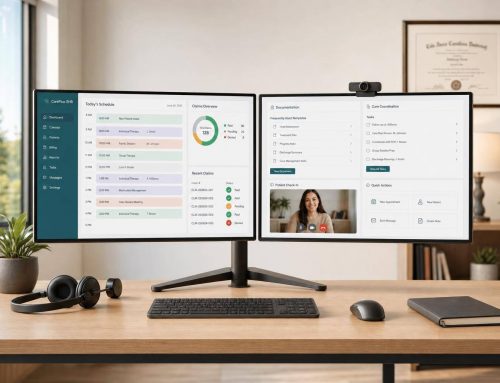
Cloud-based EHR systems are transforming healthcare. They offer a modern approach to managing digital health records. These systems are accessible, secure, and efficient.
Less admin.
Stronger teams.
Better client outcomes.
See how behavioral health organizations streamline documentation, staffing, and client engagement with ContinuumCloud.
Which solution would you like to explore?
Key Takeaways
Cloud-based EHRs provide secure, anytime access to patient records, enabling real-time collaboration, telehealth, and improved care coordination. They reduce hardware and maintenance costs, scale easily with practice growth, and deliver automatic updates that bolster security and regulatory compliance. Strong interoperability and integration with billing, scheduling, and population health tools streamline workflows and support better outcomes. When selecting a system, prioritize scalability, integrations, usability, and robust security features.
Healthcare providers can access electronic health records from anywhere. This flexibility enhances collaboration and improves patient care.
Cloud healthcare software reduces the need for costly IT infrastructure. It offers scalable solutions that grow with your practice.
Security is a top priority. Cloud-based systems provide robust protection for sensitive patient data. They ensure compliance with healthcare regulations.
Adopting cloud-based EHRs can lead to better patient outcomes. They streamline operations and support telehealth services. The future of healthcare is in the cloud.
Summary
Cloud-based EHRs offer secure, anytime access to patient records, enabling real-time collaboration, telehealth, and better-coordinated care. They reduce hardware and maintenance costs while scaling with practice needs, and automatic updates help maintain security and regulatory compliance. Robust interoperability and integration with billing, scheduling, and population health tools streamline workflows and improve outcomes. When choosing a system, prioritize scalability, integration, usability, and strong security features.
What Are Cloud-Based EHR Systems?
Cloud-based Electronic Health Record (EHR) systems are digital platforms. They store and manage patient data using the internet. This approach eliminates the need for on-site servers and hardware.
Key features of cloud-based EHR systems include:
- Remote access from any location
- Automatic software updates
- Enhanced security measures
These systems integrate various healthcare functions. They connect billing, scheduling, and patient management into one platform. This integration simplifies operations and improves efficiency.
A fundamental benefit is scalability. Practices can expand their operations without significant infrastructure investments. This adaptability makes cloud-based systems appealing to healthcare providers of all sizes.
Key Benefits of Cloud-Based EHR Systems
Cloud-based EHR systems offer numerous benefits. They transform how healthcare providers handle patient data. The systems enhance efficiency and security.
One major advantage is enhanced data accessibility. Healthcare professionals can access patient records from any location. This feature supports more flexible and mobile healthcare services.
Moreover, cloud systems facilitate real-time collaboration among healthcare teams. This collaboration leads to better coordinated care. Patients benefit from more comprehensive treatment plans.
Another crucial benefit is cost efficiency. Cloud EHR systems reduce the need for expensive hardware. Lower maintenance costs also ease the financial burden on healthcare practices.
Cloud-based EHRs also ensure data is up-to-date. Automatic software updates are a standard feature. These updates include the latest security and compliance measures.
Key advantages include:
- Enhanced accessibility
- Cost savings
- Real-time collaboration
- Automatic updates
- Improved security
Incorporating cloud healthcare software boosts practice efficiency. Healthcare providers can deliver better patient outcomes. Cloud-based systems empower both small and large practices alike.
Enhanced Accessibility and Collaboration
Cloud-based EHR systems improve accessibility. Providers can review patient records from various locations. This flexibility is vital for remote consultations and telehealth services.
Collaboration among healthcare teams is streamlined with cloud systems. Real-time updates ensure everyone has the latest information. This reduces errors and enhances patient care coordination.
Collaborative benefits include:
- Remote access to records
- Real-time data updates
- Enhanced communication among teams
Enhanced collaboration improves patient outcomes. Healthcare teams can quickly share insights. This enables timely decision-making and comprehensive treatment plans.
Cost Savings and Scalability
Cloud-based EHRs present considerable cost savings. Practices save on physical hardware and maintenance expenses. Shifting to the cloud can lead to significant financial benefits.
Scalability is another critical advantage. Cloud systems grow with the practice’s needs. Adding users or data requires no additional infrastructure.
Financial and growth benefits include:
- Reduced hardware needs
- Lower maintenance costs
- Easy scalability for growth
Smaller practices find cloud EHRs especially appealing. Cost savings make these systems accessible. Growth potential is never limited by infrastructure constraints.
Security and Compliance
Security is paramount in healthcare. Cloud-based EHRs use advanced security measures. Encryption and multi-factor authentication protect patient data.
Compliance with regulations, like HIPAA, is supported by cloud systems. They include audit trails and robust security protocols. This ensures sensitive information remains secure.
Key security features include:
- Encryption
- Multi-factor authentication
- Compliance with regulations
These systems reduce data breach risks. Enhanced security fosters trust with patients. Practices can confidently handle sensitive health information.
Improved Patient Care and Engagement
Cloud EHR systems bolster patient care quality. They provide comprehensive patient histories. This leads to better informed clinical decisions.
Patient engagement is also enhanced. Features like patient portals allow record access and communication. Patients can actively participate in their healthcare journey.
Patient benefits include:
- Comprehensive health records
- Access to patient portals
- Improved communication with providers
These improvements lead to better health outcomes. Patients enjoy a more personalized care experience. Engagement and care quality are significantly improved through cloud EHRs.
How Cloud-Based EHR Systems Support Modern Healthcare
Cloud-based EHR systems are revolutionizing modern healthcare. These systems enhance interoperability among providers. Seamless data exchange ensures continuity of care across various platforms.
Cloud EHRs support population health management effectively. They aggregate data for comprehensive analysis. This helps healthcare organizations identify trends and improve patient outcomes.
Integration with other healthcare software maximizes efficiency. Systems like billing and scheduling are streamlined, reducing administrative tasks. This allows providers to focus more on patient care.
Supportive features include:
- Seamless data exchange
- Population health management
- Integration with other software
By adopting these systems, healthcare practices align with current technological advancements. This ensures they provide high-quality and timely care. The integration of cloud-based EHRs is vital for future-ready healthcare services.
Choosing the Best Cloud-Based EHR Systems
Selecting the best cloud-based EHR system involves careful consideration. The ideal solution should align with your practice’s unique needs. Evaluate the features and flexibility each system offers.
Focus on scalability and integration capabilities. A good EHR solutions grows with your practice, accommodating more users and data seamlessly. It should also integrate with existing healthcare software for streamlined operations.
User experience is paramount. Look for systems with intuitive interfaces to reduce the learning curve for staff. Don’t forget to assess the security features to ensure patient data protection.
Key factors to consider:
- Scalability and integration
- User interface and experience
- Security features
Choosing the right EHR system can transform how you deliver care. It enhances efficiency and ensures robust security. Make a decision that supports your organization’s long-term goals and patient care standards.
Why ContinuumCloud Is One of the Best Cloud-Based EHR Systems in the U.S.
Choosing the right EHR is critical for healthcare and behavioral health organizations looking to improve efficiency, care quality, and compliance. Among today’s top cloud healthcare software solutions, ContinuumCloud stands out as one of the best cloud-based EHR systems especially for behavioral health and human services providers across the United States.
ContinuumCloud delivers secure, scalable, and highly accessible EHR technology, giving organizations the tools they need to streamline operations, improve client outcomes, and stay compliant in an evolving healthcare landscape.
Why ContinuumCloud Excels as a Cloud-Based EHR Systems?
1. Anywhere, Anytime Access
Cloud-based EHR systems allow providers to securely access records from any device.
ContinuumCloud enhances this with mobile-friendly tools and real-time data access ideal for distributed teams and remote care.
2. Strong Data Security & HIPAA Compliance
Cloud healthcare software must provide advanced protection. ContinuumCloud delivers HIPAA-compliant hosting, encryption, audit trails, and rigorous security protocols to safeguard sensitive patient information.
3. Lower IT Costs & Less Maintenance
Traditional on-premise systems require servers, updates, and IT staff.
Cloud-based EHR systems like Continuum Cloud eliminate these burdens with automatic updates, no local servers, and reduced IT overhead.
4. Scalable for Growing Providers
Healthcare organizations evolve—and so should their EHR.
We provide scalable modules, flexible configurations, and integrations that support small clinics up to large multi-location organizations.
5. Streamlined Workflows & Automation
Cloud-based EHR systems improve productivity, and ContinuumCloud takes this further with:
- Automated documentation
- Smart scheduling
- Integrated billing
- Digital forms
- Role-based workflows
This reduces administrative load and enhances staff efficiency.
6. Integrated Reporting & Analytics
It includes real-time dashboards and outcome tracking, giving leaders better visibility into performance, compliance, and care delivery.
7. Better Care Coordination
By connecting clinical, financial, and operational data, Continuum Cloud helps providers deliver more connected, efficient, and high-quality care.
Why ContinuumCloud Stands Out in the U.S. Market
When evaluating the best cloud-based EHR systems in the United States, ContinuumCloud excels because it is:
✔ Purpose-built for behavioral health & human services
✔ Designed for compliance with U.S. healthcare regulations
✔ Highly configurable for diverse provider needs
✔ Built to streamline care delivery, billing, and reporting
For organizations seeking a modern, secure, and scalable cloud-based EHR, Continuum Cloud provides a complete and future-ready solution.
Conclusion: The Future of Digital Health Records
Cloud-based EHR systems are reshaping healthcare delivery. They provide unmatched benefits in accessibility, security, and efficiency.
As technology evolves, embracing these systems becomes vital. Their adoption ensures enhanced patient care and streamlines medical operations. Solutions like ContinuumCloud lead the way by offering secure, scalable, and purpose-built cloud healthcare software that empowers providers to deliver better outcomes. The future of digital health records looks promising with these innovations.