Operating separate EHR systems for residential and outpatient services creates inefficiencies that hurt both patient care and financial performance. Key issues include:
- Time Loss: Clinicians lose up to 20 minutes daily due to inefficient documentation, costing a 10-clinician clinic over $120,000 annually.
- Poor Care Coordination: Disconnected systems lead to fragmented patient data, increasing errors and delays in treatment.
- Burnout: 60% of behavioral health professionals cite EHR frustrations as a major contributor to burnout.
- Billing Problems: Manual processes result in delayed claims, errors, and revenue loss.
- Compliance Risks: Multiple systems complicate HIPAA compliance and increase security vulnerabilities.
Unified EHR platforms like Welligent solve these problems by combining documentation, scheduling, billing, and communication into a single system. This reduces inefficiencies, improves care coordination, and supports staff well-being while cutting costs.
Your EHR Can’t Do This – But our Integrated Behavioral Health EHR Can
1. Dual-EHR Systems
Having separate EHR systems creates hurdles for every department. When platforms can’t communicate, data ends up scattered, making it harder to access critical information like behavioral care plans, treatment notes, or medication lists as patients transition between care levels. This lack of integration disrupts everyday workflows and lowers the quality of patient care. Staff often waste time searching for information across systems, turning what should be smooth transitions into unnecessary delays.
Data Integration
When residential and outpatient programs use different platforms, operational silos form, leading to specific interoperability issues. Dylan Souza, Vice President of Marketing at ContinuumCloud, highlights the problem:
“Due to healthcare silos, stigma, lack of coordination, and protracted communication, sometimes important information is missed”.
Without interoperability, coordinating care between internal teams and external referral partners becomes a challenge, often requiring separate messaging tools to fill the gaps. The statistics paint a clear picture: only 46% of psychiatric hospitals use EHRs, a stark contrast to the 96% adoption rate in general medicine and surgery. Similarly, just 61% of office-based psychiatrists use EHRs, compared to over 93% in other specialties. These adoption gaps hinder care coordination and make accessing vital information more difficult.
Administrative and Training Efficiency
Dual systems also complicate staff workflows. Employees must navigate multiple platforms, leading to redundant data entry and longer training periods. Manual processes become the norm, increasing charge lag days and slowing down patient intake and revenue collection. This added complexity only worsens existing staffing challenges. As Souza points out:
“In healthcare, redundancy accounts for one of the biggest wastes in terms of resource allocation”.
These inefficiencies ripple through the organization, affecting both operations and finances.
Revenue Cycle Management
Separate systems create major obstacles in billing. Manual charge entry introduces risks like lost charges, delayed submissions, and insurance denials. Without automatic communication between clinical documentation and billing modules, each charge becomes vulnerable to errors. This slows down cash flow and adds to the administrative workload, as staff must double-check entries across platforms. The result? A system that feels clunky and inefficient, highlighting the need for a more integrated approach.
Compliance and Security
Disconnected platforms also make compliance more difficult. Each system may use different security protocols and certification standards, complicating efforts to maintain consistent HIPAA compliance and implement security updates. Fragmented data across multiple systems makes it harder to track progress notes, treatment plans, and quality metrics. Without a centralized platform for secure communication, organizations might resort to less secure methods, increasing the risk of exposing sensitive patient data. These challenges underscore the necessity of a unified system, which will be explored in the next section.
2. Welligent Unified EHR
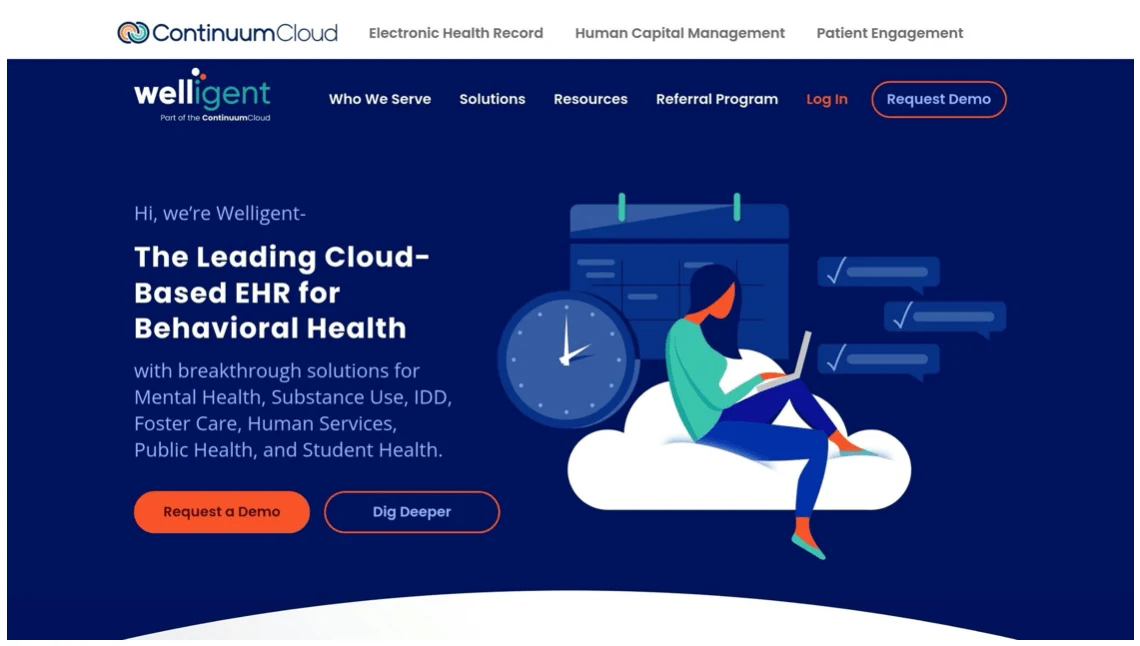
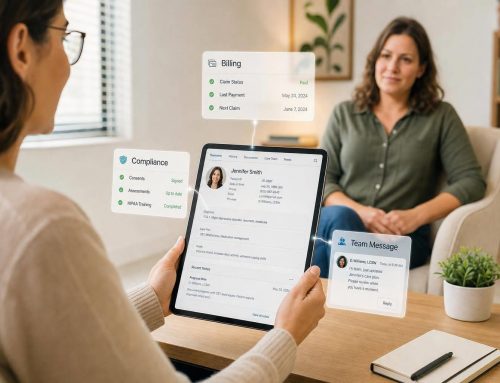
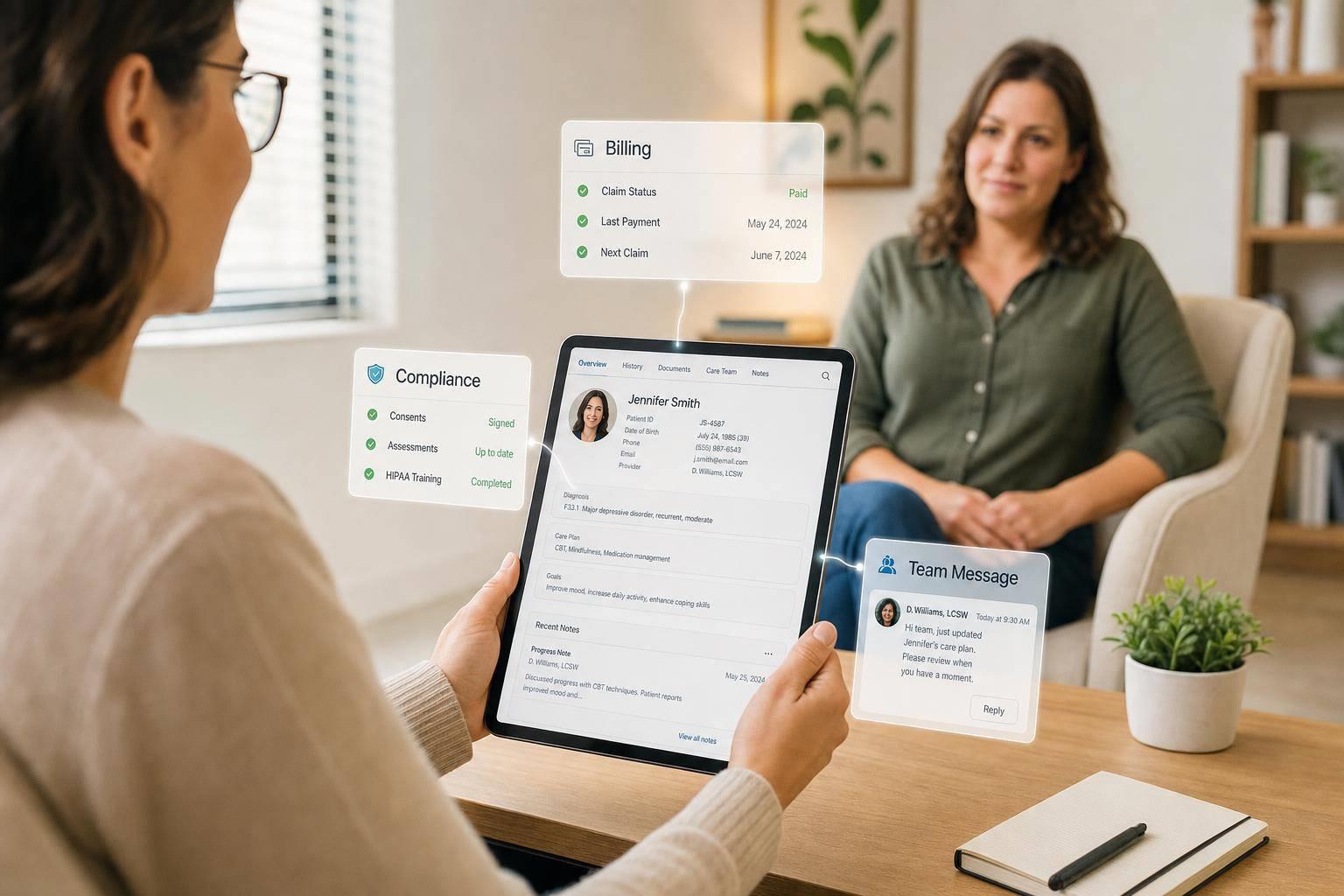
Welligent offers a streamlined solution by combining residential and outpatient operations into a single cloud-based platform. By centralizing clinical care, documentation, scheduling, medication management, and billing, it eliminates the inefficiencies of managing multiple EHR systems.
Data Integration
Welligent keeps everything in one place, maintaining a unified record that tracks each client’s complete care journey. Jeremy Ulderich, Senior Reporting Analyst at Grafton Integrated Health Network, highlights the benefits:
“With Welligent it’s right there, we train our staff to use it, we train our staff to reference it, there are no drops of information that are really essential to our clients”.
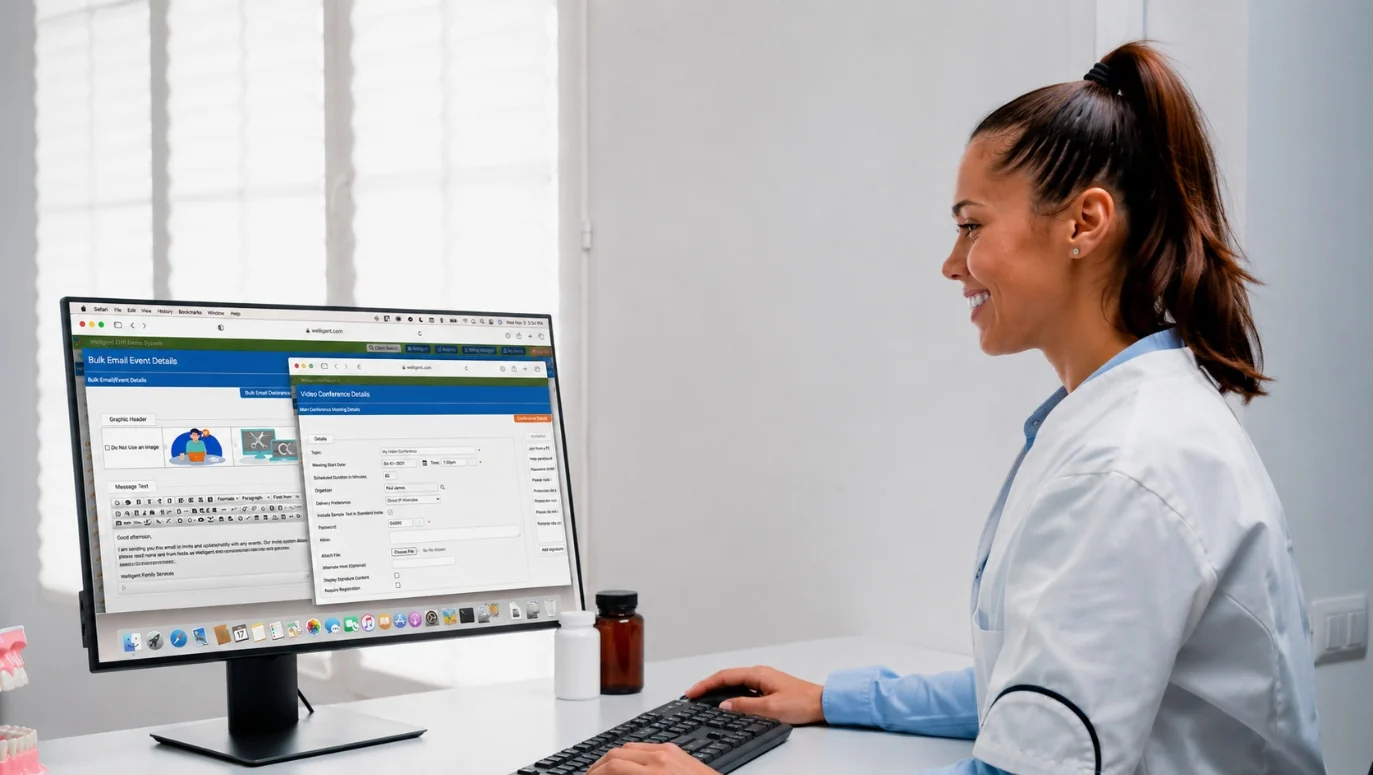
The platform ensures clinical documentation and medical coding flow directly into billing without requiring manual input. Its mobile EHR capabilities, including the Welligent Express app, allow staff to document care in the field – even offline. Once connected, the data syncs automatically. Features like Welligent Chat enable real-time communication between residential and outpatient teams. Additionally, organizations can configure workflows for specific programs while keeping all data securely centralized.
Administrative and Training Efficiency
Using a single interface simplifies training for staff, reducing learning curves and eliminating the confusion of toggling between systems. Stacey Scanlon, Clinical Director at Southwest Family Guidance Center, shares:
“It enables us on so many levels… Facilitating a comprehensive view of each client’s care”.
Users rate the platform 4.8/5, often praising its ease of use and responsive support team. The system also simplifies billing with customizable rules for complex scenarios like bundled claims and waterfall billing, helping reduce denial costs. With a 99.999% uptime guarantee, Welligent ensures reliable performance for daily operations.
Revenue Cycle Management
By automating links between documentation and billing, Welligent reduces errors and speeds up revenue collection. Features like automated Medicaid/Medi-Cal eligibility checks and real-time billing capabilities minimize delays. Katharine Spehar, Director of HR and Operations at Southwest Family Guidance Center, explains:
“The most impactful elements for us are being able to manage so many different types of services that we offer and being able to customize the software to meet the programs we are implementing”.
This seamless integration prevents revenue loss and shortens charge lag days, while maintaining compliance throughout the billing process.
Compliance and Security
Welligent meets rigorous standards, including ONC-ACB certification and Meaningful Use Stage 3 compliance for security and interoperability. It also holds AICPA SOC and SLI Certified® credentials. Administrators can set multi-level user access controls to protect sensitive data, ensuring clinical and billing staff only access what they need. Integrated audit tools help monitor documentation and enforce regulatory standards across all programs. The HIPAA-compliant Welligent Connect portal allows patients secure, read-only access to their medical records.
Studies show that 60% of behavioral health leaders report a positive impact from their EHR systems. Moreover, using integrated modules for Measurement-Based Care can increase the likelihood of clients achieving long-term, reliable change by 3.5 times.
Pros and Cons

Dual EHR vs Unified EHR Systems Comparison for Behavioral Health
Let’s compare dual-EHR systems with Welligent’s unified platform. The table below breaks down the key differences:
|
Factor |
Dual-EHR Systems |
Welligent Unified EHR |
|
Data Integrity |
High risk of duplicate records. |
Seamless data flow minimizes duplication and improves accuracy. |
|
Care Coordination |
Care is often fragmented due to siloed systems. |
Real-time data sharing ensures coordinated care across all settings. |
|
Administrative Burden |
Requires extra effort to reconcile multiple platforms. |
Simplifies processes by automating tasks and centralizing patient data. |
|
Staff Training |
Staff must navigate and learn multiple systems. |
Features a single, user-friendly interface for documentation, scheduling, and billing. |
|
Maintenance Costs |
High costs due to manual updates, patches, and added IT staff. |
Lower costs with fully managed, automatic updates. |
|
Mobile Access |
Limited or requires separate mobile solutions. |
Offers a unified mobile app (Welligent Express) that works on-site or in the field, with or without Wi-Fi. |
|
Financial Risk |
Hidden costs from issues like downtime, denied claims, and security vulnerabilities. |
Predictable scaling and improved revenue cycle management. |
The differences between these systems go beyond surface-level conveniences – they directly affect workflow efficiency and operational costs. Research highlights the challenges of fragmented systems. According to ContinuumCloud, “The health care system is rife with information silos that hinder managed care between departments, providers, and payers. Communication barriers result in fragmented patient care, compromised case management, extra managerial burdens, and poor patient outcomes.” On average, clinicians working with fragmented systems experience 1.4 task switches per minute, disrupting their focus and workflow. This inefficiency adds up, costing over an hour of productivity daily.
Welligent’s unified platform eliminates these pain points by consolidating all data into a single source. Glenda Pittman, Finance and IS Division Director at Arlington County Community Services Board, shares her experience:
“We have numerous programs, and we can adapt the configuration based on program needs and documents. I think that’s been very advantageous for us.”
Dual systems also come with hidden expenses. For instance, they often require additional IT staff to handle manual patches and data migrations. Security vulnerabilities across multiple platforms can lead to costly HIPAA violations, with fines potentially reaching millions. Furthermore, around 30% of practices replace their EHR within three years, with transitions costing hundreds of thousands of dollars in the first year alone.
Conclusion
Using separate EHR systems for residential and outpatient programs comes with hidden costs that go well beyond the price of software licenses. These dual-EHR setups lead to wasted resources through manual data reconciliation, redundant training, and disjointed workflows. For a mid-sized clinic with ten clinicians, these inefficiencies can result in over $120,000 in lost revenue annually. A unified platform offers a straightforward solution by simplifying operations and eliminating these costly gaps.
Welligent tackles these challenges by combining documentation, scheduling, billing, and reporting into one seamless system. With features like over 1,200 self-service reports, automated claims processing, and mobile functionality that works even offline, Welligent ensures efficiency at every level. Plus, the platform’s ONC-HIT and Meaningful Use Stage 3 certification guarantees compliance across all service lines. These improvements not only reduce costs but also lighten the load for clinical staff, allowing them to focus more on patient care.
Streamlined technology plays a key role in retaining a skilled workforce. By optimizing EHR workflows through a unified system, organizations can cut documentation time by 30–50%. This means clinicians can spend more time with patients instead of wrestling with inefficient systems.
The drawbacks of dual-EHR systems are clear, making the transition to a unified platform not just a good idea but a necessary step. Conducting workflow audits to pinpoint bottlenecks and using ROI calculators to estimate potential savings can help organizations make informed decisions.
Switching to a unified EHR platform shifts focus from managing technology to delivering quality patient care. By breaking down information silos, reducing administrative tasks, and creating a more efficient system, organizations can build a solid foundation for long-term growth across all areas of service.
FAQs
What are the downsides of using separate EHR systems for residential and outpatient care?
Using different EHR systems for residential and outpatient care often creates duplicate data entry and incomplete patient records. This not only wastes valuable time but also cuts into billable hours. On top of that, juggling multiple systems drives up administrative and IT costs, making operations more expensive and harder to manage.
The lack of integration between these systems also increases the chance of mistakes, compliance problems, and adds to staff burnout as employees struggle with disconnected workflows. By switching to a unified system, organizations can simplify processes, reduce errors, and create a smoother, less stressful work environment for their teams.
How can using a single EHR system improve care coordination and reduce errors?
A unified electronic health record (EHR) system brings all patient information together in one place, ensuring that authorized healthcare providers can access the most current details when needed. This centralization strengthens communication, simplifies care coordination, and helps prevent errors like duplicate or missing records.
With all patient data in one system, providers can develop more precise treatment plans, steer clear of medication mistakes, and maintain consistent documentation. The result? Better care for patients, fewer risks, and valuable time saved for everyone involved.
What are the compliance and security advantages of using a unified EHR system like Welligent?
Using a unified EHR system like Welligent brings together clinical, billing, and administrative data into one secure, cloud-based platform. This consolidation not only simplifies workflows but also ensures compliance with stringent federal standards. Welligent holds certifications such as Meaningful Use Stage 3 and ONC-ACB, which guarantee its ability to safeguard patient data while meeting regulatory requirements.
By combining modules like scheduling, documentation, and revenue-cycle management within a single system, Welligent eliminates the inefficiencies and risks that come with juggling separate platforms for residential and outpatient care. Its advanced security features – such as encryption, role-based access, and audit trails – help protect sensitive information and make compliance audits more manageable. Plus, the platform’s automated reporting tools save time by generating accurate, compliant documents with ease.